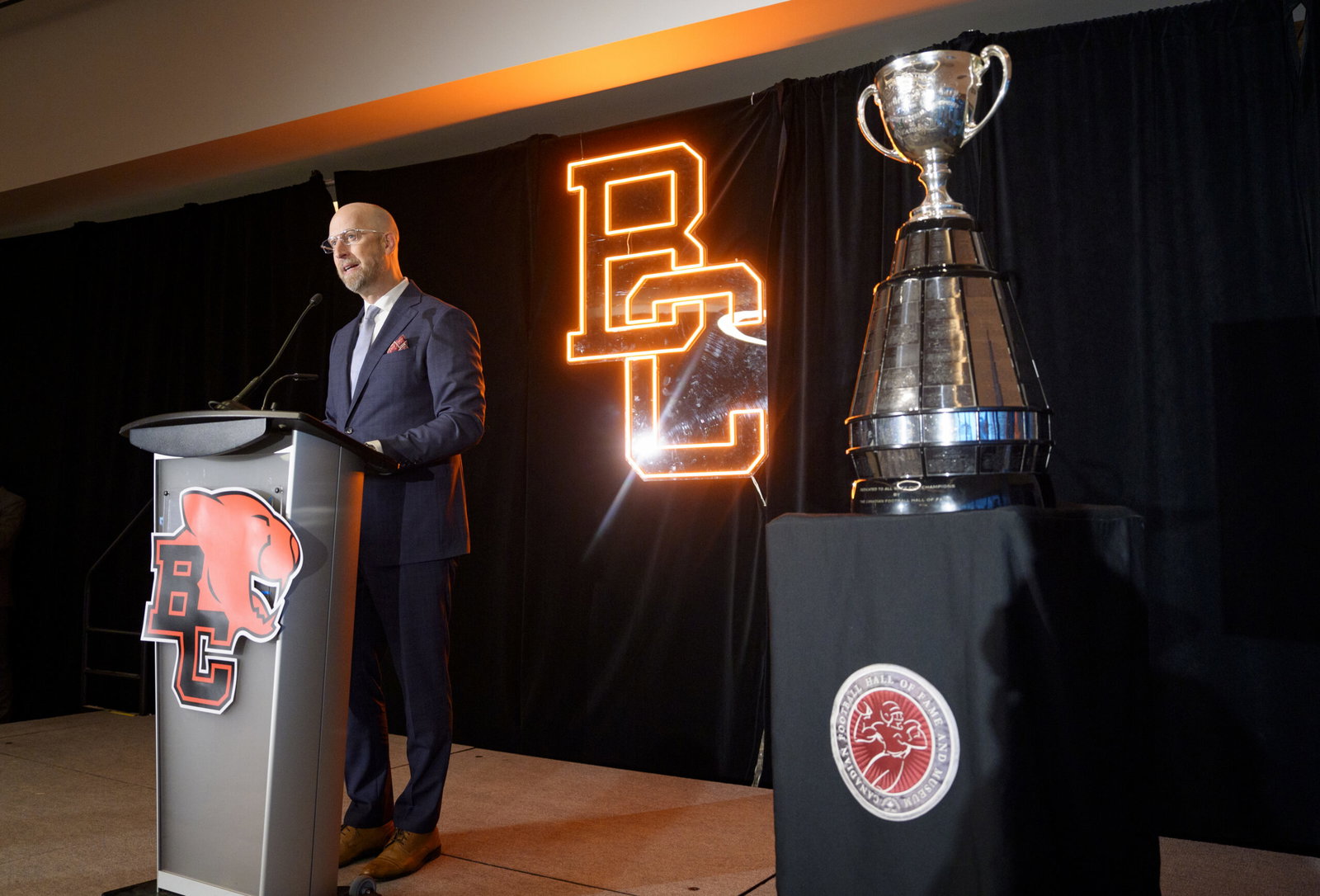
CFL commissioner Stewart Johnston must be getting pretty good at napping on cross-country flights, because he’s not losing any sleep over putting a sixth straight Grey Cup in Western Canada.
“No, not at all. I think there’s great interest across the country from all nine of our markets in hosting Grey Cups. They know what a celebration it is and what impact it can bring to the community that hosts a Grey Cup,” Johnston told the media when asked if he was concerned by the lack of Eastern representation.
“I think a lot of the time the run of Grey Cup locations is cyclical, and I wouldn’t be surprised if once we see some renovations of stadiums completed, for example, in Ottawa and at the Big O in Montreal, that we’ll see more interest there, and we’ll see it come back East.”
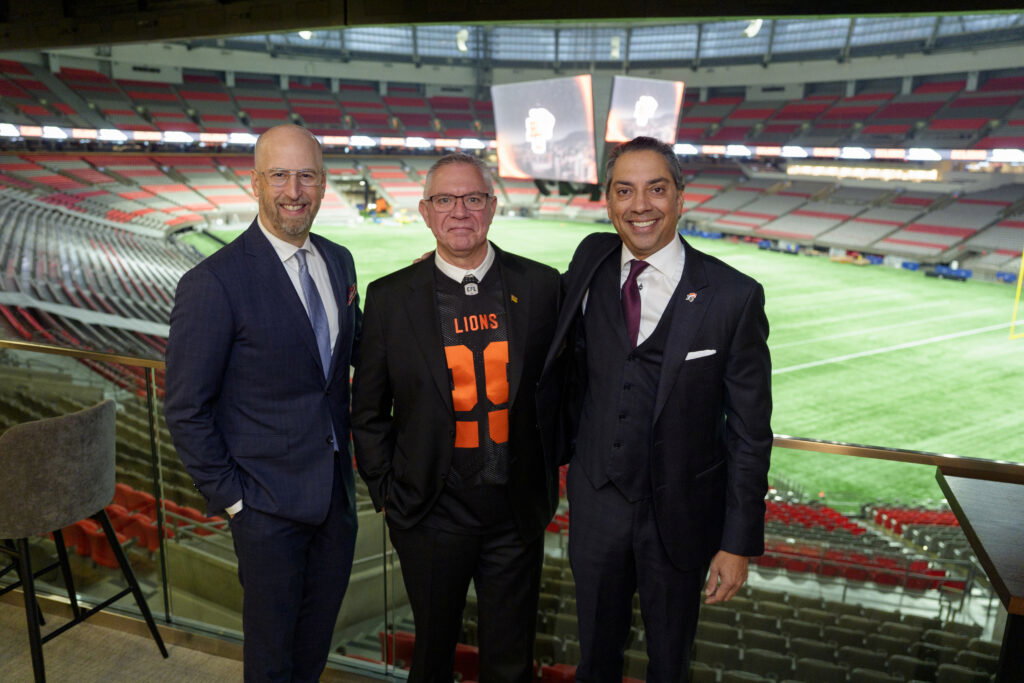
The former telecommunications executive was in Vancouver on Thursday to award hosting privileges for the 2029 Grey Cup, just a day after granting Edmonton the same honour for 2028. That follows games in Vancouver in 2024, Winnipeg in 2025, and Calgary in 2026, as well as the upcoming event in Regina in 2027.
The last CFL title game hosted in the East was in Hamilton in 2023, meaning fans from that half of the country will have endured at least six straight years of increased travel costs for their annual pilgrimage before the next one. It marks the longest consecutive run of Grey Cups being held in the same division since Montreal and Toronto alternated hosting duties for seven consecutive years between 1976 and 1982.
Some disparity is unavoidable given circumstances around the league. In Ottawa, the Lansdowne 2.0 renovation project will see the team endure reduced capacity until 2030, taking them out of the running for the time being. Montreal hasn’t hosted since 2008 due to issues with Olympic Stadium, with an ongoing roof renovation projected to be completed in spring 2028. The Alouettes’ regular venue, Percival Molson Memorial Stadium at McGill University, is too old and outdated to host a Grey Cup.
However, the two remaining East Division franchises don’t appear particularly motivated to correct the Western imbalance. Hamilton has understandably taken a backseat after hosting in 2021 and 2023, but Toronto, which last held the games in 2016, also hasn’t risen to the challenge.
“I think that every market’s got to decide when is the right time for them. There are a lot of factors that go into that,” Johnston said. “Certainly, we know that Toronto put together a fantastic World Cup themselves, and that was a big focus with great renovations that occurred at BMO (Field). I do expect that we’ll have a lot of interest in the East going forward.”
Grey Cups were previously assigned to host cities by the CFL league office, with the franchise paying a rights fee but keeping the profits from the event. That has changed to an open bidding process over the past decade, where teams must present their business plan in order to win the rights. Revenue from the event is also now shared between all nine franchises and the league office.
Bids are not made public unless independently reported. It is unclear when the Argonauts and their ownership group, Maple Leafs Sports and Entertainment, last put their hat in the ring, though Johnston did not refute the suggestion that they have not done so recently. He also did not disclose whether he’s had individual conversations with team leadership to encourage future bids.
“We have a competitive bid process, and we talk about that at the league level all the time,” the commissioner said. “Looking forward to future conversations on that as well.”
Grey Cup hosting privileges have typically been awarded two years in advance. This year’s double announcement was not initially planned, as both the Elks and Lions presented proposals to host in 2028. Both were deemed worthy, allowing for 2029 to be announced early.
“I think that came down to two spectacular bids. When we had a conversation at the board level, unanimously the board said these need to be our next two host cities because of the vision that both Edmonton and Vancouver brought to the Grey Cup,” Johnston said, noting that he hopes the trend continues.
“I would like to see our league get out ahead of and create a longer runway for Grey Cup cities. Having Regina into Edmonton into B.C. is a nice runway. I’d like to see if we can increase that runway even further.”
The side effect of that proactive approach is that even if Toronto, Montreal, or Hamilton wanted to bid in 2029 to break the Eastern drought, they weren’t afforded the opportunity. They will now have to wait until 2030, when Ottawa can also enter the mix, though it will still take a strong bid to earn the rights.
Ironically, the most concrete proposal for a Grey Cup in the East may currently belong to a franchise that doesn’t exist, as recent reports indicate the potential expansion team in Quebec City has been promised an opportunity to host as early as 2033.

From 3DownNation Experts

Edmonton Elks
Official: Edmonton awarded 115th Grey Cup in 2028
Calgary Stampeders
Calgary Stampeders hire Noel Thorpe as defensive coordinator
Saskatchewan Roughriders
Saskatchewan Roughriders sign DeCarlos Nicholson
Saskatchewan Roughriders
Saskatchewan Roughriders bring back Jy Gilmore
Winnipeg Blue Bombers
Winnipeg Blue Bombers re-sign Cam Allen, one other
Winnipeg Blue Bombers
Winnipeg Blue Bombers re-sign four
Hamilton Tiger-Cats
Hamilton Tiger-Cats sign Florida State standout
Hamilton Tiger-Cats
Hamilton Tiger-Cats bring back Nik Constantinou
Toronto Argonauts
Toronto Argonauts make Peter Nicastro one of CFL’s highest-paid non-QBs
Ottawa Redblacks
Candidates to be the next general manager of the Ottawa Redblacks
Ottawa Redblacks
Ottawa Redblacks fire head coach and general manager Ryan Dinwiddie
Montreal Alouettes
Montreal Alouettes sign Stampeders draft pick Tristan Marois
Montreal Alouettes
Montreal Alouettes sign seven

Hamilton Tiger-Cats
Former Hamilton Tiger-Cats head coach June Jones dead at 73
Saskatchewan Roughriders
Saskatchewan Roughriders enter CFL offseason with over 30 pending free agents

Winnipeg Blue Bombers
Official: Dru Brown to start East Semi-Final for Winnipeg Blue Bombers

Winnipeg Blue Bombers
Trey Vaval wins second consecutive CFL Most Outstanding Special Teams Player award
Toronto Argonauts
Toronto Argonauts have over 20 pending CFL free agents for 2027
Toronto Argonauts
Former CFL QB Cameron Dukes making arena football comeback
Saskatchewan Roughriders
Regina Rams displaced by new CFL field at Mosaic Stadium