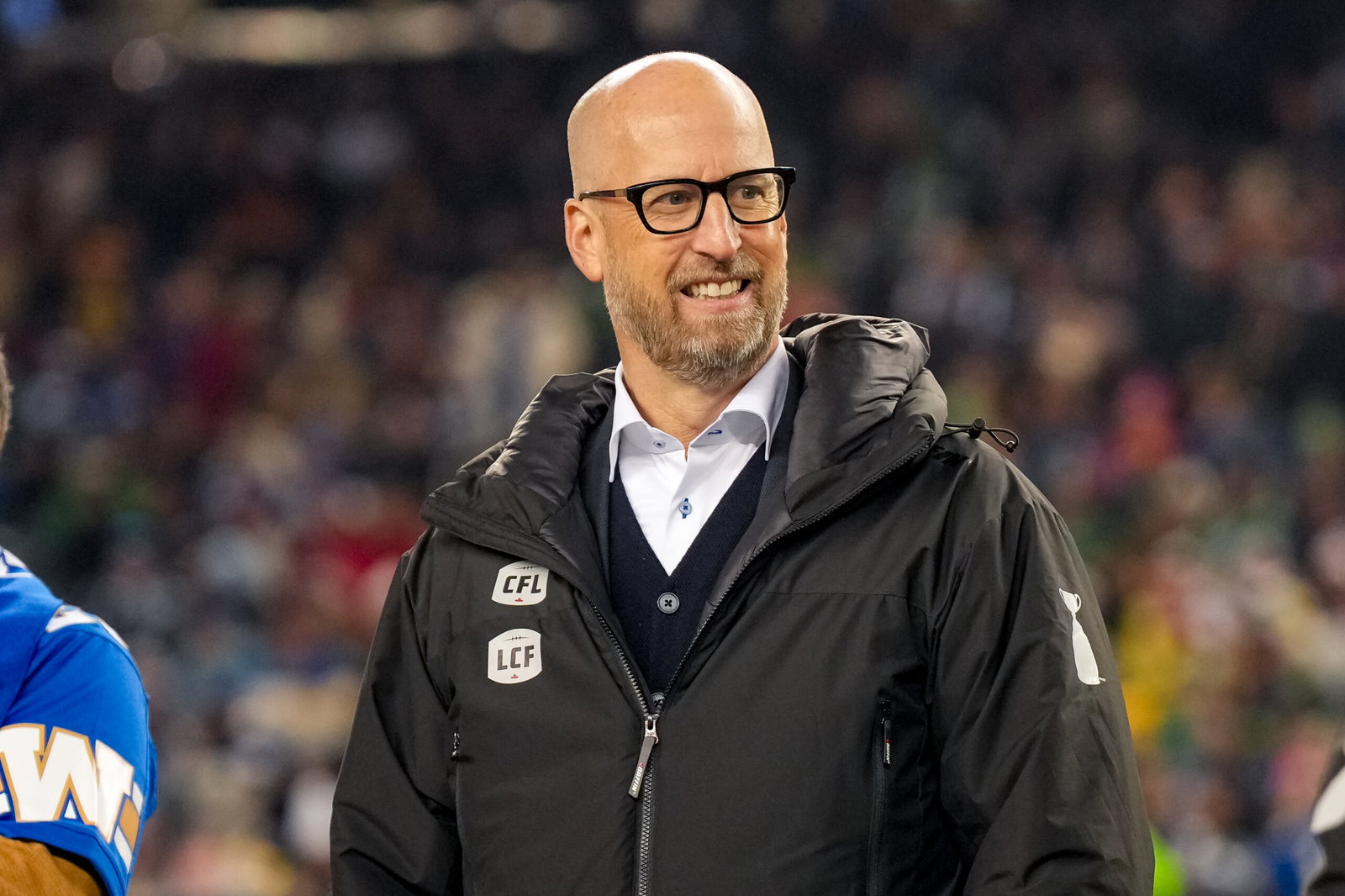
CFL commissioner Stewart Johnston wasn’t willing to talk specifics during his media rights victory tour, but confirmed that the historic new agreements will be a financial boon for the three-down league.
“I can concur that there is a significant increase (in compensation). I’m just not going to go further than that,” Johnston said in a sitdown with 3DownNation.
“I’m not going to comment on any numbers. I’ve seen some of those reported. What I can say is that the value that the CFL, the greatest sport in the world, can offer was duly recognized. We certainly know our incumbent (TSN) knows exactly what we deliver as a media partner, and certainly DAZN, and ultimately YouTube as well, they agreed.”
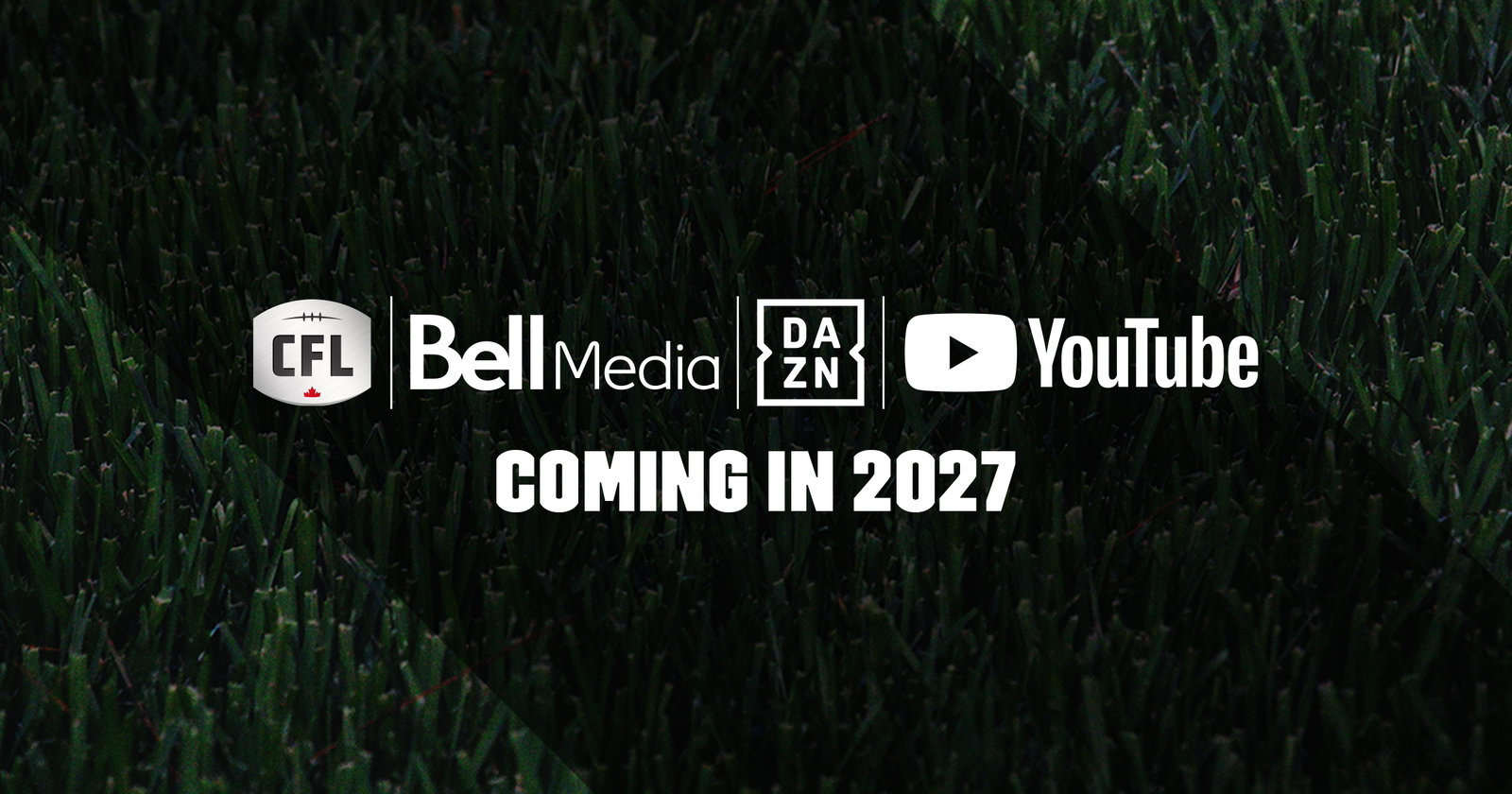
The CFL unveiled the future of its broadcast rights on Thursday, announcing six-year contracts with Bell Media and online streamer DAZN that will begin in 2027. YouTube is also on board as a “premier platform partner,” which will see them stream some preseason games, enhanced CFL Combine coverage, and other exclusive behind-the-scenes content.
The deal splits the league’s domestic media rights for the first time since 2008, with DAZN gaining 21 regular-season games and two playoff contests for its subscription-based platform under the Saturday Night Football banner. Bell Media will air 60 regular-season games, six playoff games, and the Grey Cup on TSN and CTV in English, while their French-language affiliate, RDS, will continue to carry 43 regular-season games, including the Montreal Alouettes’ entire schedule, plus the postseason.
While official figures were not made public, Arash Madani reported that the new deals are valued at close to $500 million over their duration, or approximately $83 million per season. The CFL’s previous agreement with Bell Media was rumoured to be in the ballpark of $50 million per season, meaning the new arrangement could represent a 60 percent increase in broadcast revenue.
“We feel very good where we landed. You watch the media industry right now, there is a lot of downward pressure on media rights — entertainment and sports. I’m very pleased to say that we bucked that trend, and we feel very good where we’ve gotten to,” Johnston indicated.
“We had multiple parties interested, names that everyone would know, and some new names on the global streaming side. They came to the party and wanted to have a discussion, because they liked what they saw from the CFL. They wanted to see if they could get involved, so it was really a robust process for us.”
The CFL has experienced positive financial growth in recent years, with defined league revenue expanding by roughly $31 million since 2022. Since taking office ahead of the 2025 season, Johnston has aggressively pursued initiatives to make the league even more attractive to investors, instituting sweeping rule changes and spearheading playoff expansion.
The lucrative new broadcast deals would appear to validate that approach, but it is unclear how transformative the impact will be on the franchises themselves. It has been regularly stated that just two of the league’s nine teams — Saskatchewan and Winnipeg — are currently profitable, though those claims have never been thoroughly vetted. Officials in both Montreal and Edmonton recently expressed optimism about returning to the black, and an increase in broadcast revenue would seem to be an important development in that pursuit.
Powered by RedCircle
Johnston was unwilling to directly answer when asked whether Thursday’s announcement would make profitability possible for all nine teams during his tenure, deeming the question a distraction from “a day of celebration.” However, he indicated that the league was moving in the right direction, albeit with much more work ahead.
“The healthier that our clubs are, the healthier that the investment can be made into all aspects of our game. That includes addressing a lot of stakeholders, and certainly, we know the players are going to have a share of that in ’28 through our revenue growth formula. We’re going to be able to see a more comfortable situation for a number of our clubs, but this is only the start,” the commissioner stressed.
“This is not the end line. This is a transformational step, but it’s a step. The journey is still long and in front of us. I believe this league is going to continue to grow. I think these next six years are just setting us up for the following six years. We’ve got ambition because we know the value that the CFL has to our fans and to our stakeholders and our commercial partners is significant. We’re excited about this as a big step, but we’ve got a long way to go.”
Some of that work will continue to be in the area of media rights, as the league has one more element to finalize before all existing deals expire at the end of the 2026 season. While DAZN will stream the CFL internationally in more than 200 markets under the terms of their contract, the right to broadcast in the United States is still up for grabs.
Johnston confirmed that conversations have been ongoing with the league’s current American television partner, CBS Sports Network, for the past several weeks, but indicated that other parties were also interested. He declined to put a deadline on a resolution, but appeared hopeful.
“I’ve got to let that process play itself out. We’ve been very pleased with the interest that we’ve seen in the U.S., and we want to make sure that our games have the right landing spot in order to drive fan interest in the US, just like we do in Canada and globally now,” he said.
“I don’t have a specific time where I think this is a cut-off where we’ve got to get it done. However, I think the process has evolved enough, and the conversations have been fruitful enough so far, that I don’t expect this to drag way into the summer. But if we continue to take interest, we’ll have those conversations, and we’re just going to let the process play out at its own pace.”
American TV rights reportedly earn the CFL $1 million annually, a pittance compared to their domestic value. Should the league manage to secure another meaningful increase, it would simply be the cherry on top of a historic set of agreements.



Calgary Stampeders
Calgary Stampeders give QB Josh Love start in preseason finale against Elks

Saskatchewan Roughriders
Corey Mace: Saskatchewan Roughriders could keep two kickers in 2026
Saskatchewan Roughriders
Saskatchewan Roughriders sign Regina product Connor Klassen

Winnipeg Blue Bombers
Canadian QB Taylor Elgersma to start Winnipeg Blue Bombers’ final preseason game
Winnipeg Blue Bombers
Mike O’Shea believes Zach Collaros still best QB in CFL

Hamilton Tiger-Cats
Hamilton Tiger-Cats to start Jake Dolegala in second preseason game
Hamilton Tiger-Cats
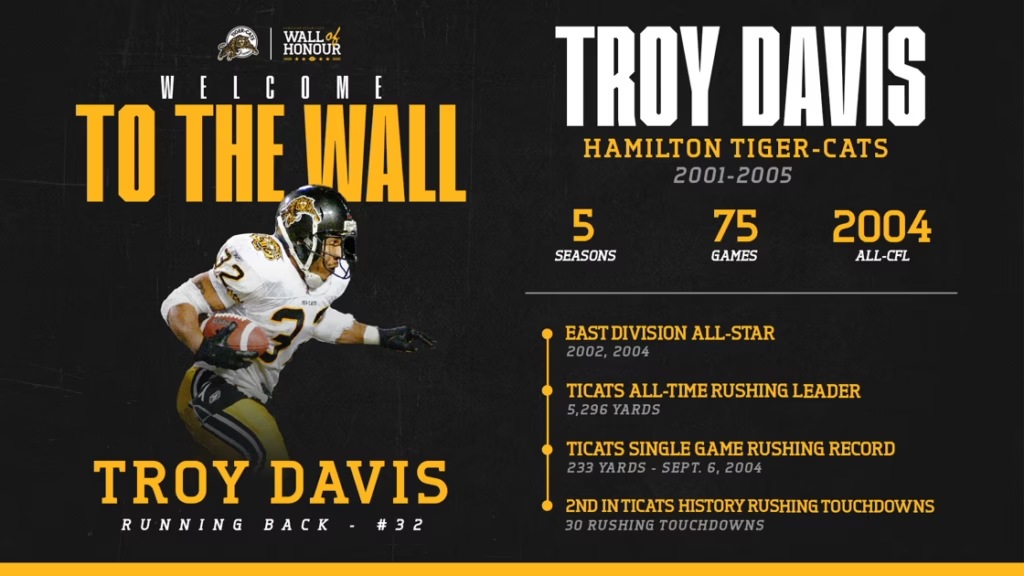
Hamilton Tiger-Cats to induct Troy Davis into Wall of Honour
Montreal Alouettes
Veteran CFL quarterback Dustin Crum chose Montreal Alouettes over B.C. Lions

Winnipeg Blue Bombers
CFL star Brady Oliveira criticizes new playoff format


Winnipeg Blue Bombers
The CFL’s highest-paid running backs and fullbacks in 2026

B.C. Lions
The CFL’s highest-paid receivers in 2026

B.C. Lions
The CFL’s 30 highest-paid players for 2026




Edmonton Elks
The CFL’s highest-paid offensive linemen in 2026



Toronto Argonauts
Toronto Argonauts cut incumbent starter Spencer Brown, nine others

Edmonton Elks
The CFL’s highest-paid defensive backs in 2026

From 3DownNation Reporters