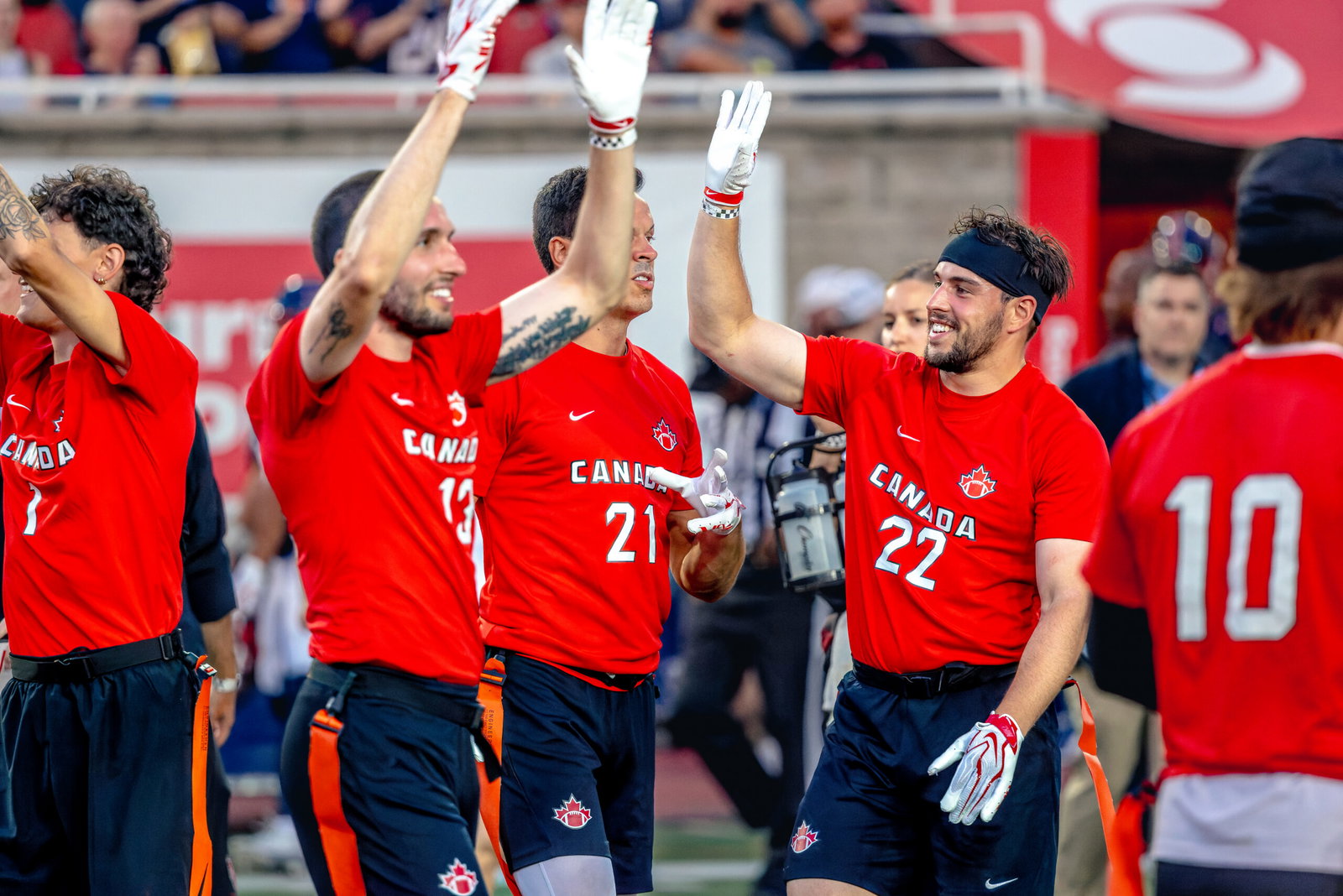
CFL teams that temporarily lose players due to the 2028 Summer Olympics in Los Angeles will not face negative financial consequences.
At his State of the League address on Friday, CFL commissioner Stewart Johnston indicated that while the precise logistics have yet to be determined, time spent competing for their national flag football teams will not count against the salary cap.
“We’re still working through that, but there will be relief from the cap for any players,” he said. “The teams should not be affected.”
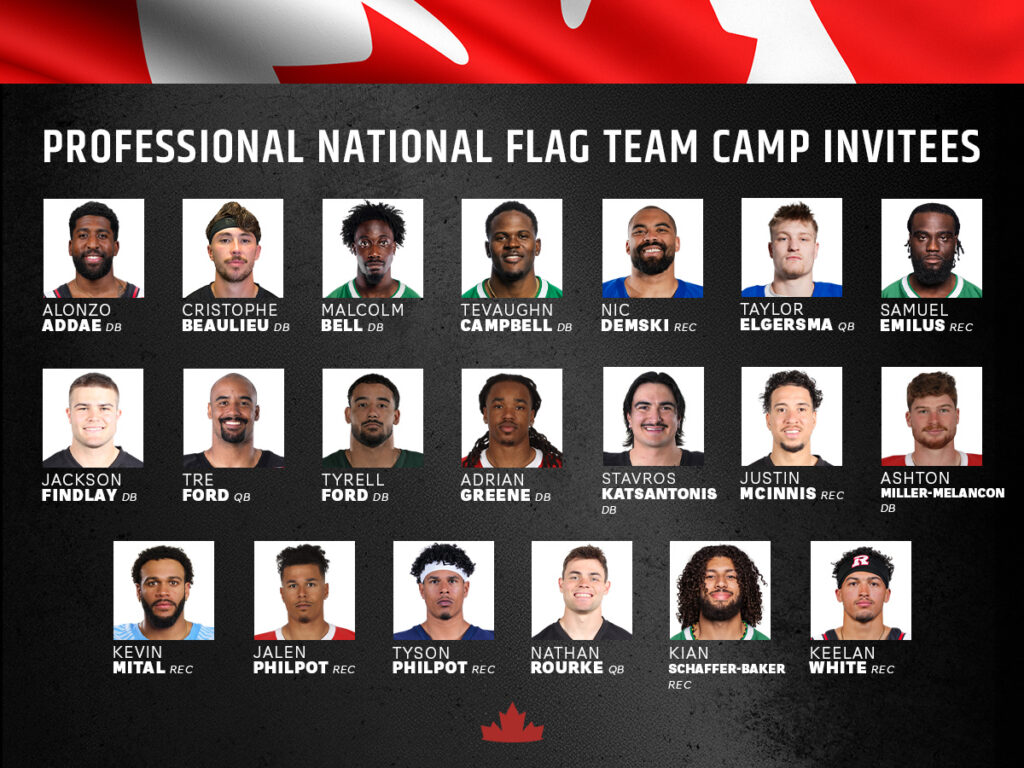
CFL players have already been officially approved for participation at LA 2028, where flag football will make its Olympic debut. Shortly before Johnston took the stage, the league announced that 20 players, including stars like Nathan Rourke and Tyson Philpot, have been invited to take part in Football Canada’s first-ever professional national flag football team camp at the end of the month.
The CFL and its nine member clubs have agreed to the parameters for players to be available for Canadian national team participation, while also coming to terms with the CFL Players’ Association on the provision of insurance coverage and health benefits for all participating players while attending camp. Similar provisions are expected to be in place for the Olympic Games.
“At the end of the day, the Olympics is an opportunity for our members. We wanted to make sure that if they wanted to explore that opportunity and a chance to win an Olympic medal, represent their country, that we were to secure their employment, they were compensated when they’re gone, and if they are hurt, that they are taken care of,” CFLPA president David Mackie said during the State of the Union press conference.
“(Injury) is a risk that the players have to expect. We can’t prevent injuries. I love to wish that we could prevent all of our injuries, but we wanted to make sure that we secured the opportunity. From a health and safety perspective, we’ve been working with the national team to make sure that there are standards upheld and to ensure that their employment is safe when they decide to try that opportunity.”
Football Canada’s men’s and women’s national teams both qualified for the Olympics by medalling at IFAF World Championships in August. The women captured the gold medal, while the men won bronze without the benefit of active professional athletes.
That dynamic will change in two years time. NFL players have also been approved to take part in the six-team Olympic tournament and could make up a sizeable portion of the roster, with CFL players filling in the gaps. However, while the experience will be the same for the participants regardless of which side of the border they play on, there will be a major difference for the leagues themselves.
The NFL will still be deep in the offseason when the Olympics kick off in mid-July, but the CFL season will already be in full swing. Rather than put the league on hiatus, Johnston reiterated that they intend to play through the tournament, as he first expressed last year.
“It’s sort of annoying, isn’t it?” he said with a laugh when asked about the timing. “Right now, there is no plan to pause our season. We think our league and our teams are strong enough to play through the Olympics. The Olympic teams, let’s face it, they aren’t large teams. There’s, I think, 10 on the team, so this won’t be a huge portion of our players. We think that with creative scheduling of our bye weeks, we can mitigate the impact of some of our stars potentially missing some games. We think right now the best call is to just keep powering through.”
The commissioner was not yet willing to say how much time players will be allowed to be away from their CFL teams for the Olympics, whether they will be afforded a training camp or only made available once the tournament begins.
“We’ve had great discussions with the CFLPA, as well as with Football Canada, to iron those details out, and there’ll be a structure to that,” he said.
The CFL has made flag football a key part of its community marketing, hosting a women’s tournament during Grey Cup week and announcing a new educational initiative that will reach over a million students. The hope is that those participants will become the players, coaches, officials, and fans of tomorrow.
Today’s players are also excited by the possibilities that flag football could bring.
“It will be an incredible honour for our members to have the opportunity to compete for their home countries and a chance at an Olympic medal. We believe this will be tremendous visibility for our stars in the game and for the CFL,” Mackie said. “It is important that our members can pursue this opportunity with the appropriate support and protections in place, and we have worked to secure those.”
The first contingent of CFL hopefuls will get their first taste of flag football from November 29 to December 5 in Chula Vista, California.


From 3DownNation Experts




Saskatchewan Roughriders
CFL commissioner Stewart Johnston urges City of Regina to reconsider stitched turf at Mosaic Stadium

Saskatchewan Roughriders
Time with Roughriders helped Cody Fajardo ‘grow up,’ figure out how to be starting CFL quarterback
Winnipeg Blue Bombers
Mike O’Shea concerned with Winnipeg Blue Bombers’ lack of scoring

Hamilton Tiger-Cats
Shawn Lemon, Simoni Lawrence joining DAZN’s CFL broadcast team
Hamilton Tiger-Cats
Hamilton Tiger-Cats add QB Will ‘Goose’ Crowder to negotiation list
Toronto Argonauts
Toronto Argonauts bring back Monkell Goodwine

Toronto Argonauts
Toronto Argonauts bring back practice roster defensive lineman


Montreal Alouettes
3DownNation CFL best bets: Grey Cup
B.C. Lions
B.C. Lions to host 2026 CFL West Semi-Final
Saskatchewan Roughriders
Riders get what Corey Mace wanted, but beware the Lions at BC Place (& other thoughts)

Saskatchewan Roughriders
Saskatchewan Roughriders to start Jack Coan, rest Trevor Harris against Elks

Toronto Argonauts
Toronto Argonauts make 15 roster changes against Alouettes
Montreal Alouettes
Montreal Alouettes sell out East Final
Winnipeg Blue Bombers
Winnipeg Blue Bombers clinch final 2026 CFL playoff spot
Saskatchewan Roughriders
Saskatchewan Roughriders could play Trevor Harris despite playoff clinch


Saskatchewan Roughriders
Saskatchewan Roughriders release three
Toronto Argonauts
Chad Kelly becomes first $1 million player in CFL salary cap era

B.C. Lions
B.C. Lions bring back Tomasi Laulile

Calgary Stampeders
Week 21 to decide CFL playoff fates of Stampeders, Roughriders, Blue Bombers