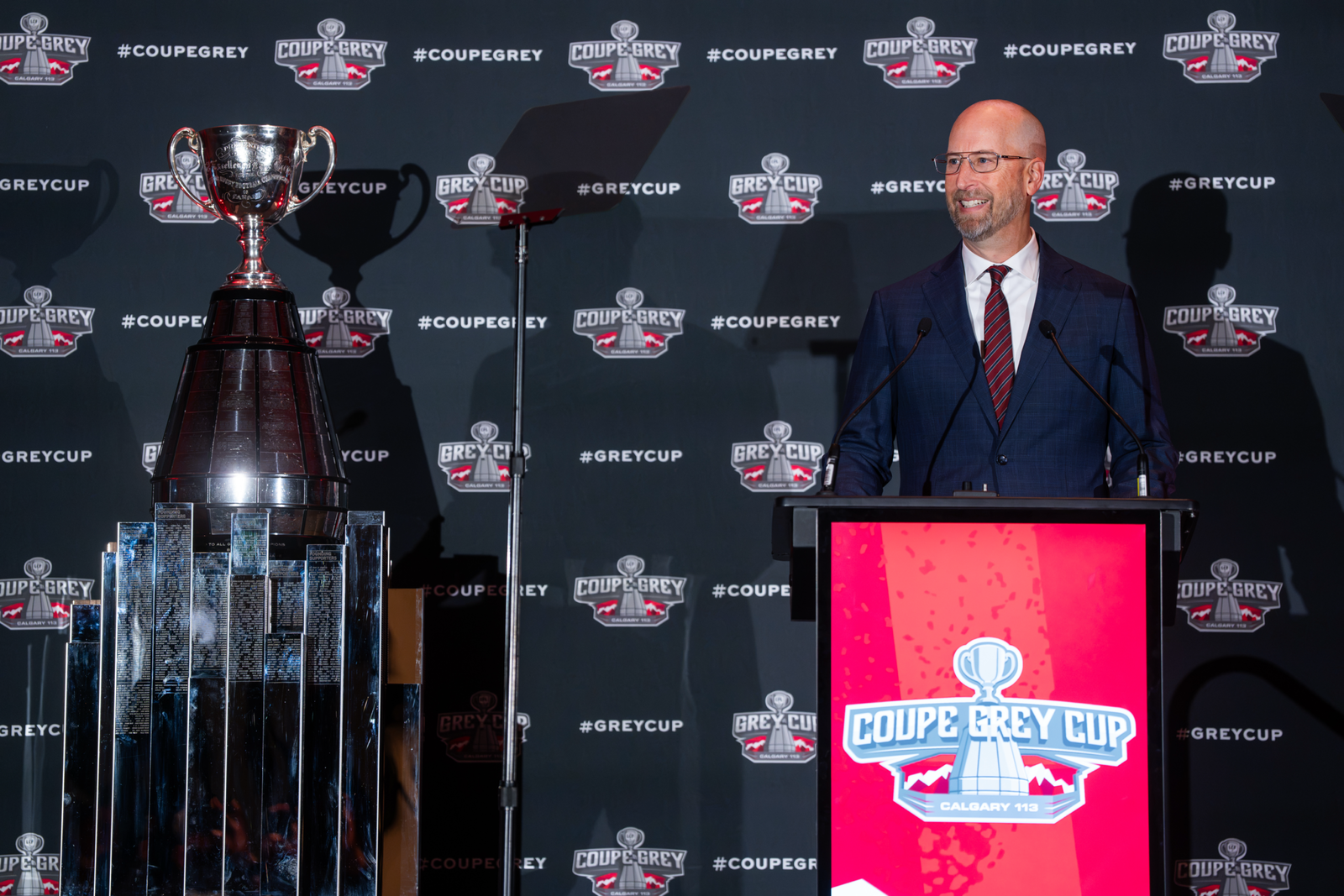
If you’re a fan with concerns about the league’s incoming changes for 2027, CFL commissioner Stewart Johnston spoke directly to you during his State of the League address on Friday.
“I know amongst the confidence and excitement about the changes, there are some fans that worry about them. I understand,” said Johnston. “Not everyone’s going to agree with every step we make, and that is okay. If you’re going to think big, occasionally you’re going to create debate.”
The changes were a hot topic at last year’s Grey Cup. When asked about the negative reaction — remember, Nathan Rourke called them “garbage” — Johnston demonstrated a level of elusiveness that would make Trey Vaval blush.
This year, it was different.
At the BMO Centre in Calgary, Johnston spoke emphatically about how the league will continue to grow and change as it moves into the future. However, he also reinforced that key elements of the game will never change.
“Like me, you have loved this game for decades, and you want to know it is still your game, so let me be clear about what will never change: three downs, 12 players, unlimited motion, and a field as wide as our love for Canadian football is deep,” said Johnston.
“This league has magnificent traditions, and we see so many of them reflected this week here in Calgary, but tradition without trajectory is merely history. Tradition without momentum is nostalgia, and tradition without vision only looks back. We cannot allow our history to become a ceiling on our ambition. Our storied past should give us the confidence to build the future.”
To be clear, Johnston still claims that the reaction to the changes has been overwhelmingly positive. He indicated that 90 percent of the feedback has been favourable when fans have recognized him on the street or at the airport. Interestingly, he did not mention receiving feedback from fans while attending actual games.
In addition to the structural changes being put in place next year — a 100-yard field, shortened end zones, and moved uprights — the league will also introduce a new playoff format featuring eight teams. Johnston said it’s “designed to create more games of consequence in the back half of our season.”
“Teams will be battling to make the playoffs, to host a playoff game, and importantly, to earn a bye to the Grey Cup semi-finals,” he said. “That matters because we saw the other side of it this year: competitive imbalance in the East left too many late-season games without enough at stake.”
It’s true that there were several meaningless games late in the year for East Division teams. The Ottawa Redblacks played six regular-season games after being eliminated from playoff contention, while the Hamilton Tiger-Cats played three.
Johnston’s not wrong. Under the new playoff format, the Redblacks would have remained eligible for the playoffs for longer and played more games that were technically meaningful. Hamilton may have also played an extra game or two with a chance to move up from seed eight to seed seven.
With that said, it seems fair to question if anyone would have cared.
Ottawa was historically bad. Whether the team was eliminated from playoff contention at 0-12, 0-14, or 0-16, the undeniable truth is they stunk and didn’t deserve to make the postseason. Period.
Under next year’s playoff format, the Tiger-Cats would have clinched a spot as soon as Ottawa was eliminated. Though the club could have theoretically fought to move up a seed, they could have also chosen to rest starters ahead of the playoffs, too.
Given that almost every team will make the postseason in 2027 and beyond, it seems fair to speculate that late-season rest could become even more prevalent than it is now.
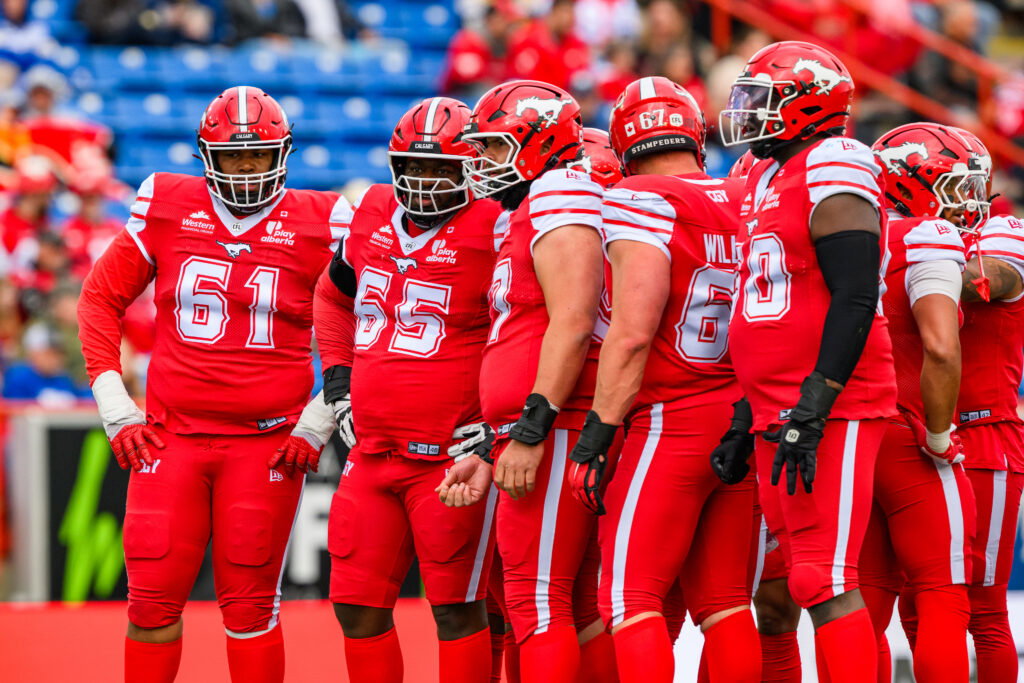
The new format will also lessen the importance of some games. The Calgary Stampeders and Winnipeg Blue Bombers met in what was essentially a playoff game in Week 19. The Blue Bombers won 33-28, and went on to earn a postseason spot while the Stampeders fell short.
If this game had been played under next year’s format, the stakes would have been much less significant. We’ll almost never get “win-and-you’re-in” games. Instead, we’ll get a lot of “win-and-you-might-move-up-one-seed” games, which seems a lot less exciting.
“My message to our players, clubs, partners, and most importantly our fans is simple: expect us to protect the things that make Canadian football special,” said Johnston.
“Expect us to keep improving our game, and expect us to think big because the CFL is not standing still. We are building, and we are doing it while remaining unmistakably Canadian.”
Though the legitimacy of the changes — particularly to the playoff format — remains up for debate, Johnston deserves credit for acknowledging the naysayers. When disgruntled fans feel unheard, they only get louder.
Now that they’ve been acknowledged, let’s see if the negativity quiets down.
Editor’s note: 3DownNation recently illustrated how the 2026 playoffs would look using next year’s format. Click here for details.


From 3DownNation Experts






Edmonton Elks
3DownNation CFL best bets: Grey Cup

Edmonton Elks
Cody Fajardo to reassess CFL future after Grey Cup


Saskatchewan Roughriders
CFL commissioner Stewart Johnston urges City of Regina to reconsider stitched turf at Mosaic Stadium

Saskatchewan Roughriders
Time with Roughriders helped Cody Fajardo ‘grow up,’ figure out how to be starting CFL quarterback

Winnipeg Blue Bombers
Mike O’Shea concerned with Winnipeg Blue Bombers’ lack of scoring


Hamilton Tiger-Cats
Shawn Lemon, Simoni Lawrence joining DAZN’s CFL broadcast team

Hamilton Tiger-Cats
Hamilton Tiger-Cats add QB Will ‘Goose’ Crowder to negotiation list

Toronto Argonauts
Toronto Argonauts bring back Monkell Goodwine

Toronto Argonauts
Toronto Argonauts bring back practice roster defensive lineman




B.C. Lions
B.C. Lions to host 2026 CFL West Semi-Final

Saskatchewan Roughriders
Riders get what Corey Mace wanted, but beware the Lions at BC Place (& other thoughts)

Saskatchewan Roughriders
Saskatchewan Roughriders to start Jack Coan, rest Trevor Harris against Elks


Toronto Argonauts
Toronto Argonauts make 15 roster changes against Alouettes
Montreal Alouettes
Montreal Alouettes sell out East Final
Winnipeg Blue Bombers
Winnipeg Blue Bombers clinch final 2026 CFL playoff spot
Saskatchewan Roughriders
Saskatchewan Roughriders could play Trevor Harris despite playoff clinch


Saskatchewan Roughriders
Saskatchewan Roughriders release three

Toronto Argonauts
Chad Kelly becomes first $1 million player in CFL salary cap era

B.C. Lions
B.C. Lions bring back Tomasi Laulile

Calgary Stampeders
Week 21 to decide CFL playoff fates of Stampeders, Roughriders, Blue Bombers