There are just four days remaining until the 2026 CFL Draft, with hundreds of players waiting to see their pro football dreams realized on Tuesday, April 28, at 7:00 p.m. EDT.
As always, 3DownNation will be your go-to source for extensive coverage of all eight rounds. Analysts J.C. Abbott and Ben Grant will be live on YouTube and Facebook for the entirety of the selection process, while John Hodge will keep you up-to-the-minute by breaking down every pick as it happens on the LIVE blog.
In the lead-up to the festivities, our team has collaborated on prospect rankings at every position, which will culminate in the unveiling of our annual Top 25. These evaluations are our own, taking into account film study, physical measurables, Combine performance, and anonymous feedback from CFL scouts and coaches. Players are ranked based on the strength of their on-field projection, with off-the-field factors such as health or legal concerns included as context in the write-up.
We have already ranked the quarterbacks, running backs, fullbacks, tight ends, receivers, offensive linemen, defensive linemen, and linebackers. Make sure to check back tomorrow when we break down the specialists.
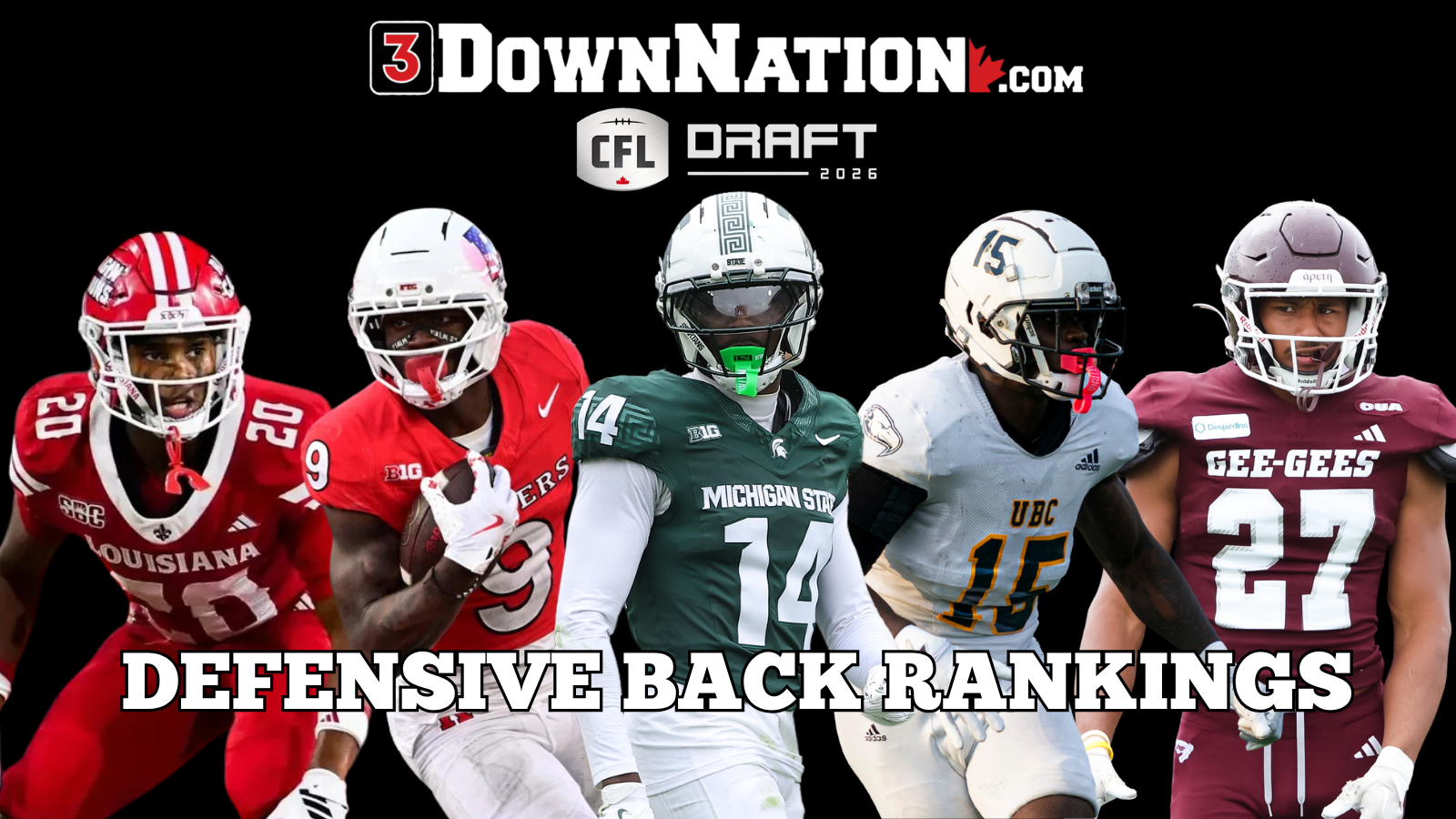
Today, we continue by examining the defensive backs. This group, like most in this year’s draft, has more than your average quota of NCAA athletes. Add in a couple of truly generational-type athletes, and there is plenty of intrigue on offer for those in need of secondary talent.
Defensive back
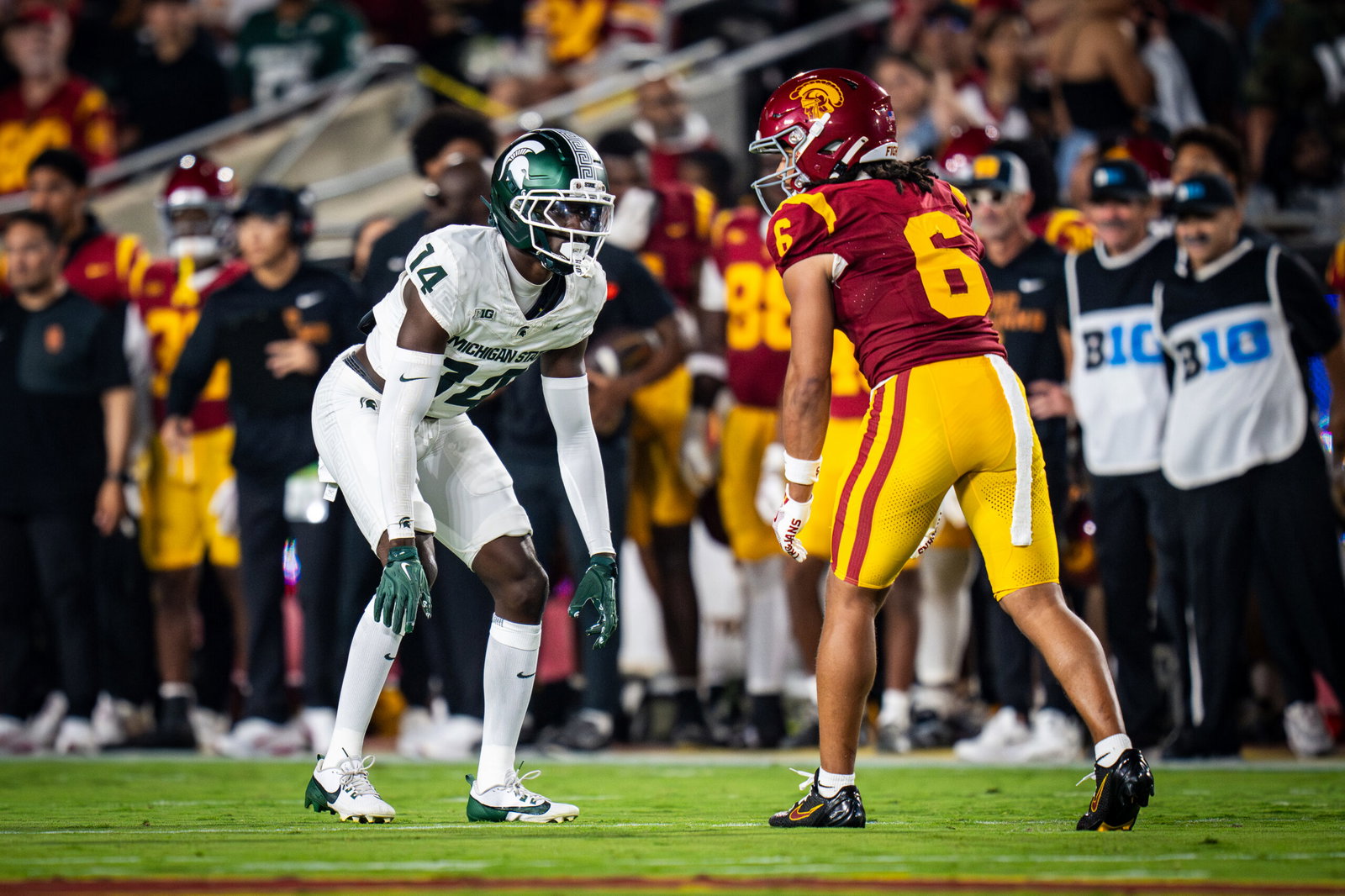
Photo courtesy: Michigan State Athletics
1) Malcolm Bell, Michigan State University (Montreal, Que.)
Bell excelled last season for the Spartans in a man-heavy system, which tends to be a difficult projection for the CFL, but his pedigree and traits are too good to overthink. The six-foot-one, 191-pound cornerback doesn’t possess NFL-level speed, but has the fluidity to stay in the receiver’s hip pocket and exceptional 33-inch arm length to break up passes when trailing. The UConn transfer is functional in zone coverage as well, though he lacks the requisite twitch to break on the ball and generate turnovers. He’s a below-average tackler, frequently missing low, but his excellent size and starter-calibre coverage skills make that worth holding your nose for.
2) Jett Elad, Rutgers University (Mississauga, Ont.)
After a lawsuit granted him seven seasons across four different academic institutions, Elad is the collegiate equivalent of an octogenarian. He has been impressively productive over that time, earning all-conference honourable mentions in both the Big Ten and Mountain West, and has been utilized from a multitude of alignments. While he has more than enough range to play free safety in the CFL, the six-foot, 201-pounder gets lost in space at times and struggles to break down as a tackler, resulting in some bad whiffs. He was far more effective when dealing with clearer pictures and tighter spaces in the box, and may be best served as a strong-side linebacker. Either way, the team that selects Elad will have to wait a few months, as he underwent hernia surgery in December and won’t be ready for training camp.
3) Devynn Cromwell, Michigan State University (Toronto, Ont.)
A generational athlete by CFL standards, Cromwell vertical jumped 40.5 inches and broad jumped over 11 feet at his pro day. Astonishingly, he achieved that second figure AFTER tearing his meniscus, an injury that prevented further testing and will keep him out of the lineup for a few more months. CFL teams will still be willing to take a swing on the six-foot, 200-pound cover man, just as Texas Tech did two years ago when they lured the former All-Canadian halfback away from the University of Guelph. The jump in competition seemed a bit much for Cromwell at both of his NCAA stops, as he rarely looked as fast at safety as his measurables indicate and struggled to handle the physicality. That suggests that he may take some time to shape into a CFL starter, but his ability to legitimately play any spot in the secondary will trump all.
4) Ethan Stuart, McMaster University (Oakville, Ont.)
A six-foot, 223-pound defensive back is normally an automatic linebacker convert when entering the CFL, as very few players can effectively operate in space at that size. Stuart is the rare exception to that rule of thumb, as his light feet and snappy hips translated into the best change of direction testing of any player in the draft. He’s primarily played halfback for the Marauders, but could easily slot in at free safety, SAM, or WILL, depending on what is required at any given moment. That is ultra-valuable in a league where rosters are so small, and the fact that he is a physical finisher on special teams will only add to the attractiveness.
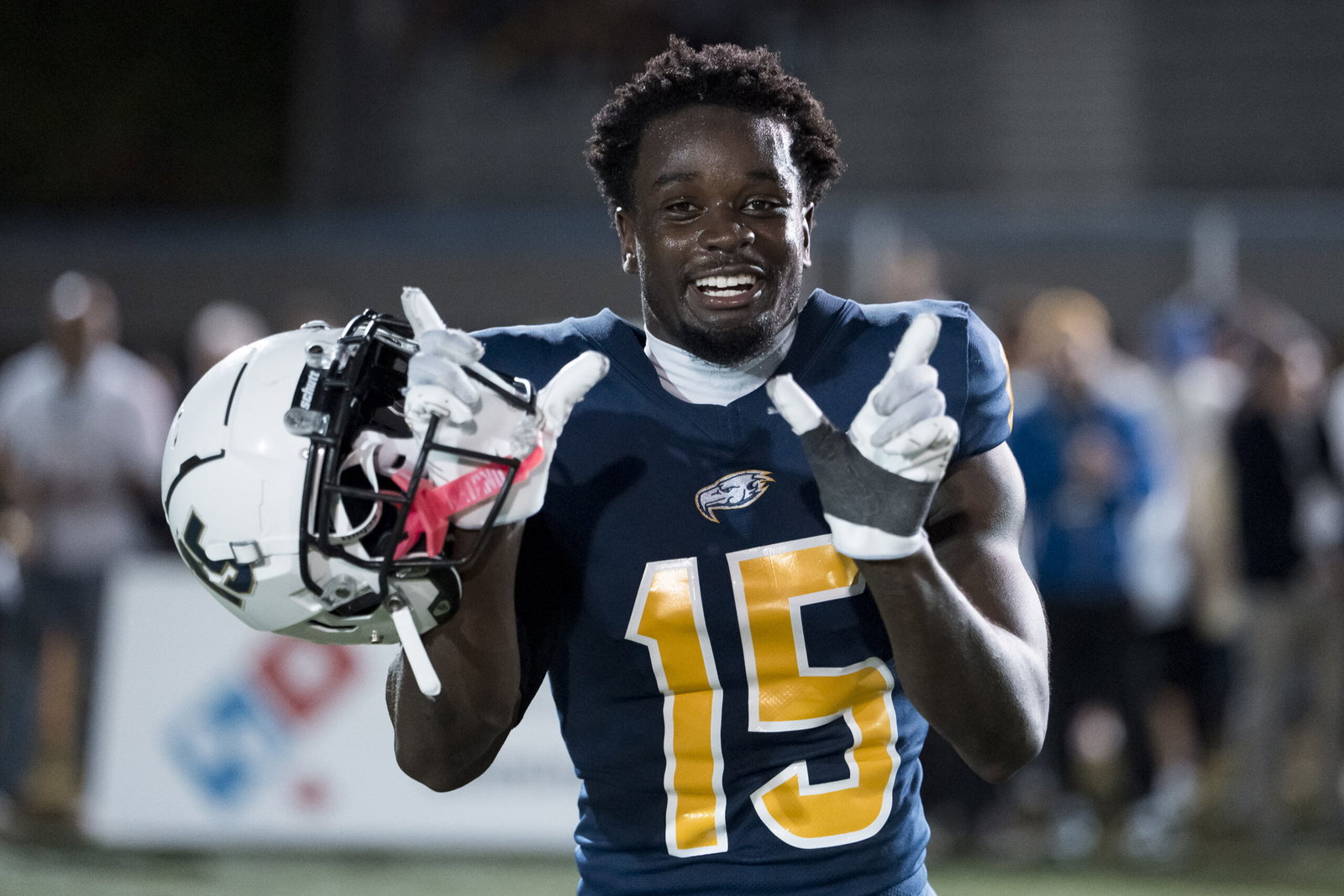
Photo courtesy: UBC Thunderbirds
5) Benjamin Sangmuah, University of British Columbia (Scarborough, Ont.)
Another physical freak, Sangmuah ran a 4.44-second forty-yard dash at UBC’s pro day and broad jumped 10-feet, 10-inches at the CFL Combine. The Ghanaian-born prospect has only been playing football for five years, picking the game up after high school, and has been deployed in a variety of different roles in the T-Birds’ defence over that time. That has sometimes been to the detriment of a player still learning the nuances of the game, and it can be tough to discern whether he is physically tentative or just slow processing, particularly when he was playing linebacker last season. The six-foot-one, 198-pounder’s athleticism has still put him around the ball more than almost any other player in this group, but he needs to play safety, where his speed and range can shine.
6) Patrick Cumberbatch, University of Ottawa (Alexandria, Ont.)
It’s not hard to find a comp for Cumberbatch, as his identical twin brother, Eric, was selected in the fifth round of last year’s draft with measurables that were almost, well, identical. Long and lean at six-foot-one and 194 pounds, the second-team OUA all-star can jump out of the gym and has the speed to chase down any opponent. Those are traits that can translate on special teams if nothing else, so after being too harsh on some of his sibling’s limitations last year, consider this spot a mea culpa.
7) Pierre Kemeni, Ohio University (Milton, Ont.)
An imposing presence at over six-foot-one and 214 pounds with 34-inch arms, you’d imagine that Kemeni’s droolworthy frame has made him a coveted lockdown corner. In reality, he’s barely seen any meaningful defensive reps across stops at Ohio, Texas State, New Mexico, and Ohio again, looking stiff and uncoordinated on those rare occasions. However, he has been productive on special teams, where that ridiculous length can be used to effectively disengage blockers, and brings a certain competitive edge that teams will appreciate.
8) Cyrus McGarrell, Northern Illinois University (Windsor, Ont.)
Most of McGarrell’s career with the Huskies has been spent as a backup, and he was limited to just two games last season. Nonetheless, his frame and testing measurables speak louder in this evaluation than his handful of starts, as the six-foot-one, 201-pound defender checks all the boxes needed to make a CFL roster on special teams. He has experience in that area from NIU and should continue living the unglamorous life of a depth safety at the next level.
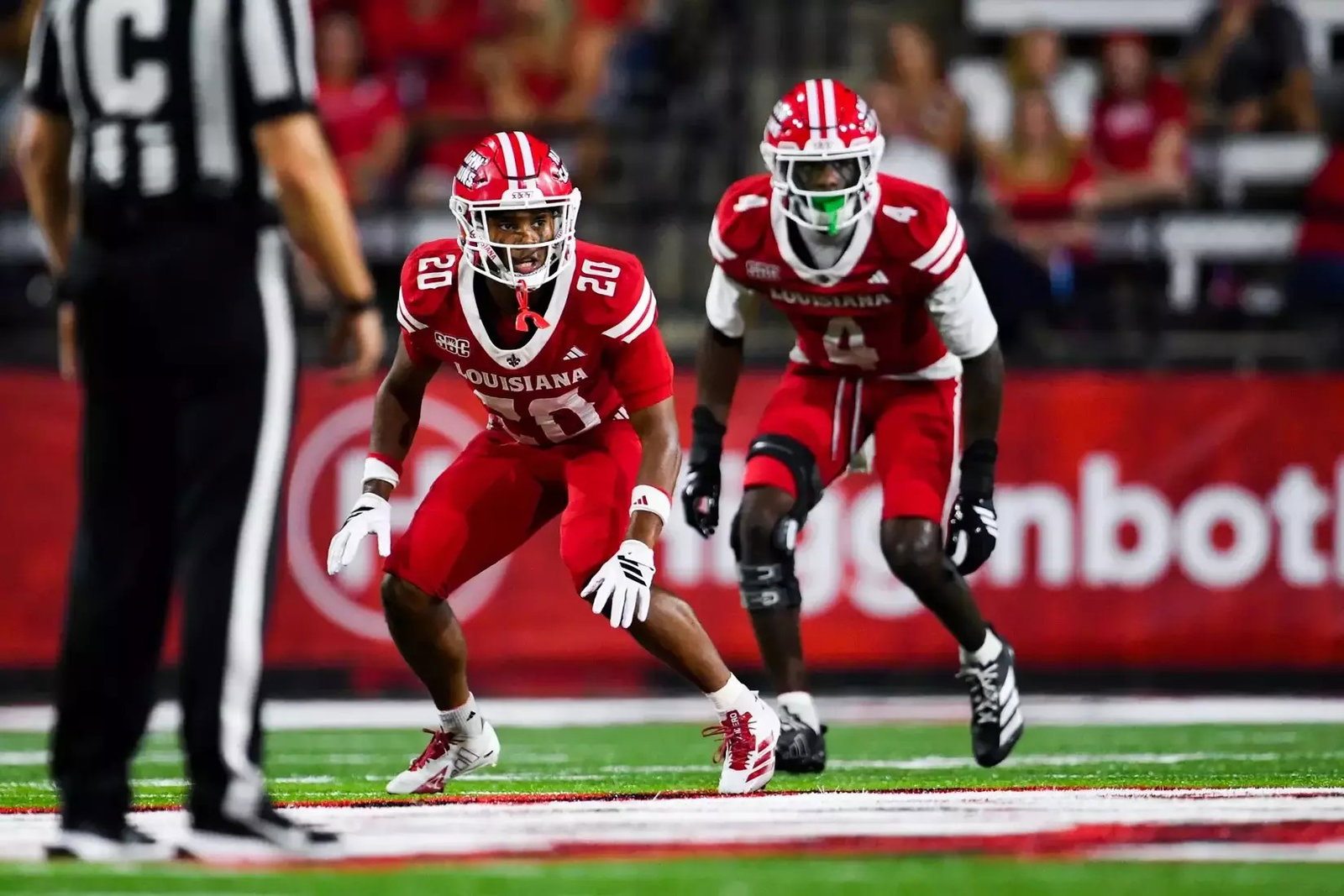
Photo courtesy: Benjamin R. Massey/Ragin’ Cajuns Athletics
9) Trae Tomlinson, University of Louisiana at Lafayette (Winnipeg, Man.)
Tomlinson’s pure coverage ability should put him much higher on this list, as he was a lockdown corner on the outside for Richmond before moving into the slot with the Ragin’ Cajuns. The Winnipeger has shown off greased-up hips and tremendous twitch out of his pedal, allowing him to close windows and break up passes. Unfortunately, that won’t matter as much to most teams as the fact that he’s five-foot-eight and 176 pounds, and they aren’t wrong to have concerns. While he was willing to get his nose dirty at the FBS level, his pint-sized body often took the worst of the contact, leaving opponents unscathed.
10) Louis-Philippe Gauthier, Université de Montréal (Montreal, Que.)
Big-time players make big-time plays in big-time moments, and few exemplify that more than Gauthier, who secured seven of his eight career interceptions in playoff games and was named the Defensive MVP of the Vanier Cup this year. At his best, the speedy six-foot, 202-pound cornerback can be an eraser who runs the routes for the receiver, but the RSEQ all-star looks smaller than he really is and has faced criticism regarding his lack of physicality.
11) Shakespeare Louis, Southeastern Louisiana University (Ottawa, Ont.)
Louis has more starting experience than a couple of fellow NCAA products listed above him, but gets knocked for being less fluid and smaller at five-foot-10 and 196 pounds. He’s got enough straight-line speed to make the pro jump and is surprisingly strong as well, though his lack of length has made taking on blocks difficult — a factor which will be top of mind for special teams coordinators.
12) Harrison Daley, University of Windsor (Burlington, Ont.)
A second-team OUA all-star with the Lancers, Daley lacks both the fluidity and range to be a starting safety in the CFL. That won’t stop him from getting drafted, though, as the six-foot-three, 218-pound thumper has long arms and a body built for special teams. Given his size and physicality, I wonder if a team might move him to linebacker, though he may not bend well enough for that position.
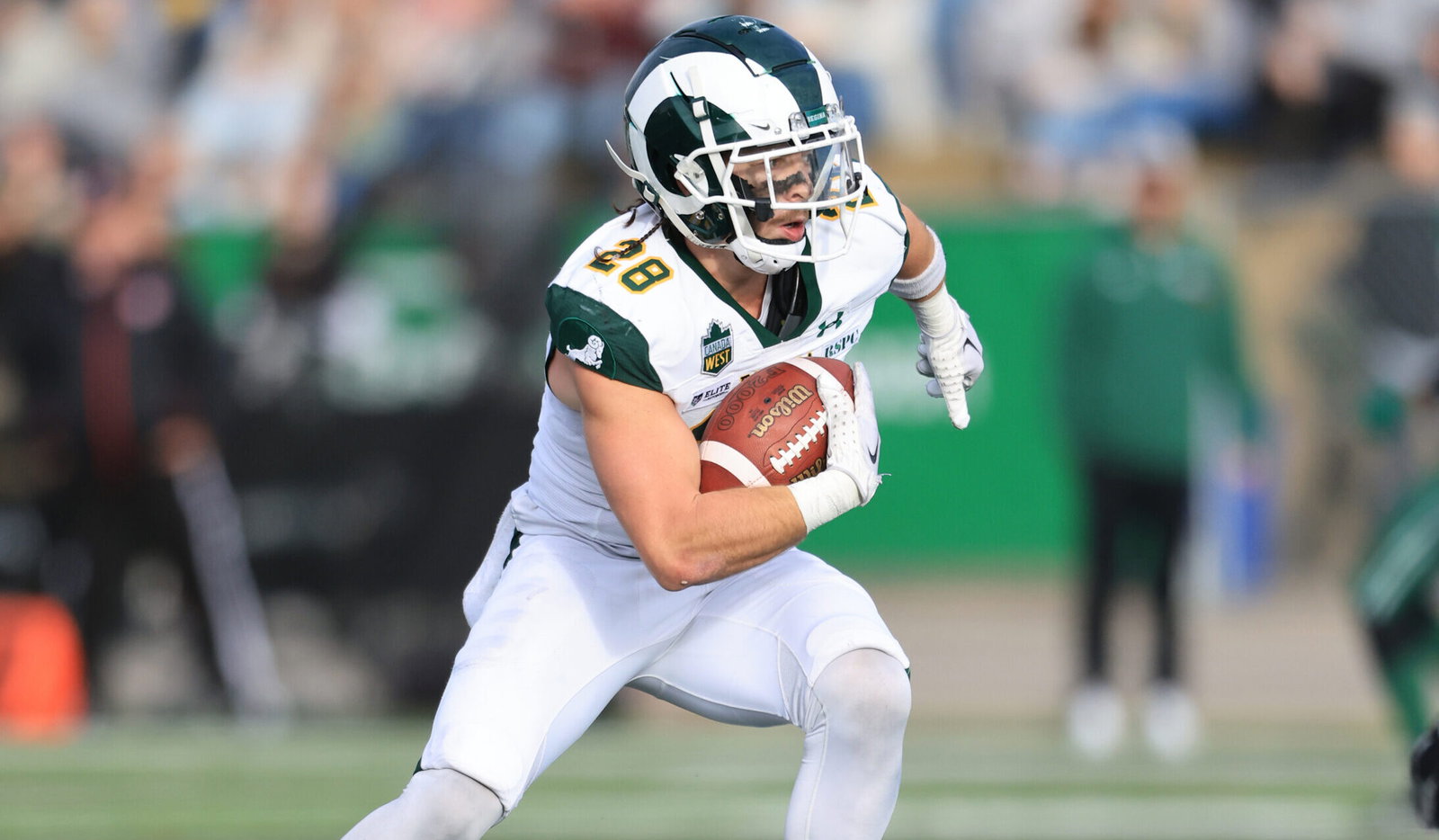
Photo courtesy: Piper Sports Photography/Regina Rams
13) Carson Sombach, University of Regina (Regina, Sask.)
A second-team All-Canadian with the Rams, Sombach is a technically sound and instinctual safety who covers more ground than he should because of his excellent change-of-direction ability and mental headstart. It is hard not to like what you see on film, but he is a fraction of the athlete that his older brother, Jackson, was in 2024, and he fell to the seventh round in a weaker draft class. The concern was and still is size, so Carson will need someone to pound the table for him to get drafted at five-foot-nine and 191 pounds.
14) Gianni Green, University of Guelph (Mississauga, Ont.)
Green earned elevation from the Invitational Combine due to his top-tier combination of size, length, and speed, but it remains to be seen if that has changed teams’ pre-existing opinions of him. By rights, the six-foot, 203-pounder should have been more dominant for the Gryphons, but only flashed in fits and starts. Someone will bank on his 4.5-speed, but others may be scared off by his inconsistent technique and suspect processing.
15) Robert Springer Jr., University of Windsor (Little Rock, Ark.)
A first-team All-Canadian with extensive playing time at both halfback and cornerback, Springer missed out on testing at the Invitational Combine due to injury, but is now healthy. Normally, that would make a player with his quick trigger, ball skills, and former NCAA pedigree a major sleeper prospect, but it is much more difficult to overcome the odds when you are five-foot-seven and 192 pounds. The tiny defender does have some unique versatility, as he previously played receiver at Central Arkansas before flipping sides of the ball.
16) Ethan John, University of Windsor (Felton, Minn.)
John tested exceptionally well across the board at the Invitational Combine, and he had to in order to be taken seriously at five-foot-nine and 189 pounds. Though he lacks Springer’s ball production, the Lancer’s other American DB has beautiful feet and spring-loaded hips. He’s also stronger and more physical than the majority of undersized players, perhaps giving him a leg up.
17) Alex McDonald, Bishop’s University (Eastern Passage, N.S.)
A two-time AUS all-star and the conference’s President’s Trophy nominee in 2024, McDonald is at his best coming down into the box as a SAM, blitzing off the edge or mixing it up in the muck. The five-foot-11, 207-pounder has a good feel for the game, is a reliable tackler and has a big enough build to survive on special teams, though his athletic measurables are generally sub-par.
18) Ryan Butler, Saint Mary’s University (Mississauga, Ont.)
A first-team All-Canadian at safety last year for the Huskies, Butler has the most interceptions of any player in this draft class with 12 — and it is not particularly close. While there is something to be said for being in the right place at the right time, few of those takeaways were the result of elite ball-hawking and the six-foot, 195-pound defender isn’t rangey enough to change that. His size is a positive, but he’s not as good a tackler in space as you’d like to project significant special team value.
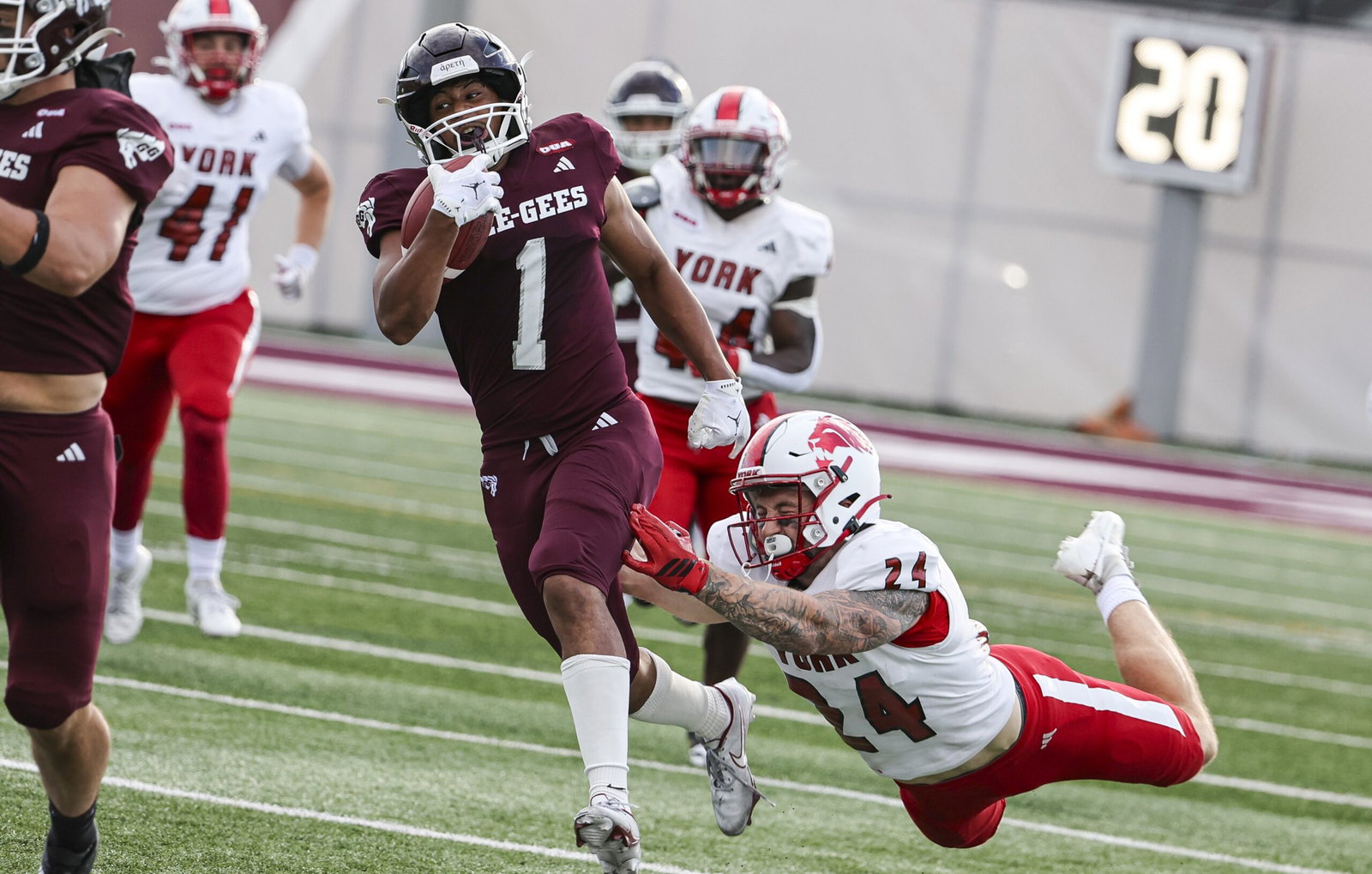
Photo courtesy: Ottawa Gee-Gees
19) Denny Ferdinand, University of Ottawa (Kanata, Ont.)
The son of the late CFL fullback of the same name, Ferdinand was a receiver at Carleton like his brother, Kaseem, before transferring to Ottawa. The five-foot-11, 194-pound cornerback has been an OUA all-star as a return specialist and showed some good recognition in Zone coverage, but lacks the physical tools to be projected as a CFL success in either area.
20) Jordan Chizda, University of Calgary (Winnipeg, Man.)
An unheralded player on a pretty bad defence, Chizda showed at the Invitational Combine that he has some promising fluidity to his game. The five-foot-11, 193-pounder had some ball production early in his career that has since tailed off, but didn’t disqualify himself like some others.
21) Schneider Cave, Carleton University (Ottawa, Ont.)
Cave has been largely forgotten while recovering from a broken fibula and dislocated ankle, but he offers unique size at a listed six-foot-one and 216 pounds. There are some major stiffness and speed concerns that won’t be aided by his injury last year, but he’s produced consistently and has a special-teams body type.
22) Tariq Brown, Okanagan Sun (Kelowna, B.C.)
A CJFL All-Canadian at safety, Brown showed some elite ball-hawking instincts with the Sun, but the testing numbers suggest he’ll have a hard time translating. The five-foot-10, 184-pound defender was slower than average and put up just five bench press reps, which makes you wonder how seriously he prepared.
23) Chandler Jones, University of Louisville (Miami, Fla.)
A meaningful contributor at multiple positions for the Cardinals, Jones has already plied his trade in Europe and needed a statement performance at the Invitational Combine to be taken seriously at 26 years old after a season out of football. Instead, he was unable to finish, bowing out with a hamstring pull. Teams may still value the pedigree, and the tape is solid, but the five-foot-11, 188-pounder is a riskier proposition than most other candidates.
24) Sebastien Reid, University of Manitoba (Surrey, B.C.)
Reid hasn’t played since getting hurt mid-way through the 2024 season and would be making the second comeback of his career in the unlikely event a team came calling at 26-years-old. The five-foot-10, 184-pound cornerback would be a risky pick for several reasons, including age, size, and personal history, but it is worth remembering that he led the Canada West in interceptions for two straight seasons.
25) Eljames Aiguomudu, Carleton University (Lasalle, Ont.)
Listed at six-foot-three and 205 pounds, Aiguomudu attended the recent CFL free agent showcase after being snubbed for the Invitational and reportedly ran sub-4.6 in the forty. His tape is extremely raw and inconsistent, but you can’t teach size or speed, which earns the Ravens’ cornerback a passing mention.



Edmonton Elks
John Hodge’s 2026 CFL Mock Draft 2.0
Calgary Stampeders
Minnesota Vikings waive All-CFL defensive lineman Jaylon Hutchings
Saskatchewan Roughriders
Longest-serving Saskatchewan Roughrider, Jorgen Hus retires from CFL
Saskatchewan Roughriders
Brett Lauther still considers himself ‘Rider for life’ after signing with Ottawa Redblacks

Winnipeg Blue Bombers
CFL coaching not on ‘near-term radar’ for retiring legend Adam Bighill
Hamilton Tiger-Cats
Hamilton Tiger-Cats sign former New York Giants cornerback Zyon Gilbert
Hamilton Tiger-Cats
Hamilton Tiger-Cats sign Utah running back Micah Bernard

Ottawa Redblacks
Original Ottawa Redblack Nigel Romick retires from CFL
Ottawa Redblacks
Ottawa Redblacks sign Memphis standout Roc Taylor, four others
Montreal Alouettes
Montreal Alouettes sign Montana standout Cannon Panfiloff, release two
B.C. Lions
John Hodge’s 2026 CFL Mock Draft 2.0


Winnipeg Blue Bombers
‘Must Love Dogs’ with CFL star Brady Oliveira to debut April 20
B.C. Lions
B.C. Lions sign NFL veteran Essang Bassey
From 3DownNation Reporters